
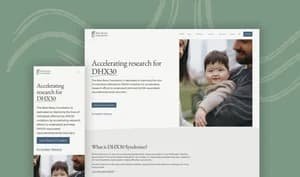
Brand and Website for an Ultra-Rare Disease Nonprofit
Rare Remy Foundation, a family-founded rare disease nonprofit based in Manhasset, New York
Building credibility from a standing start
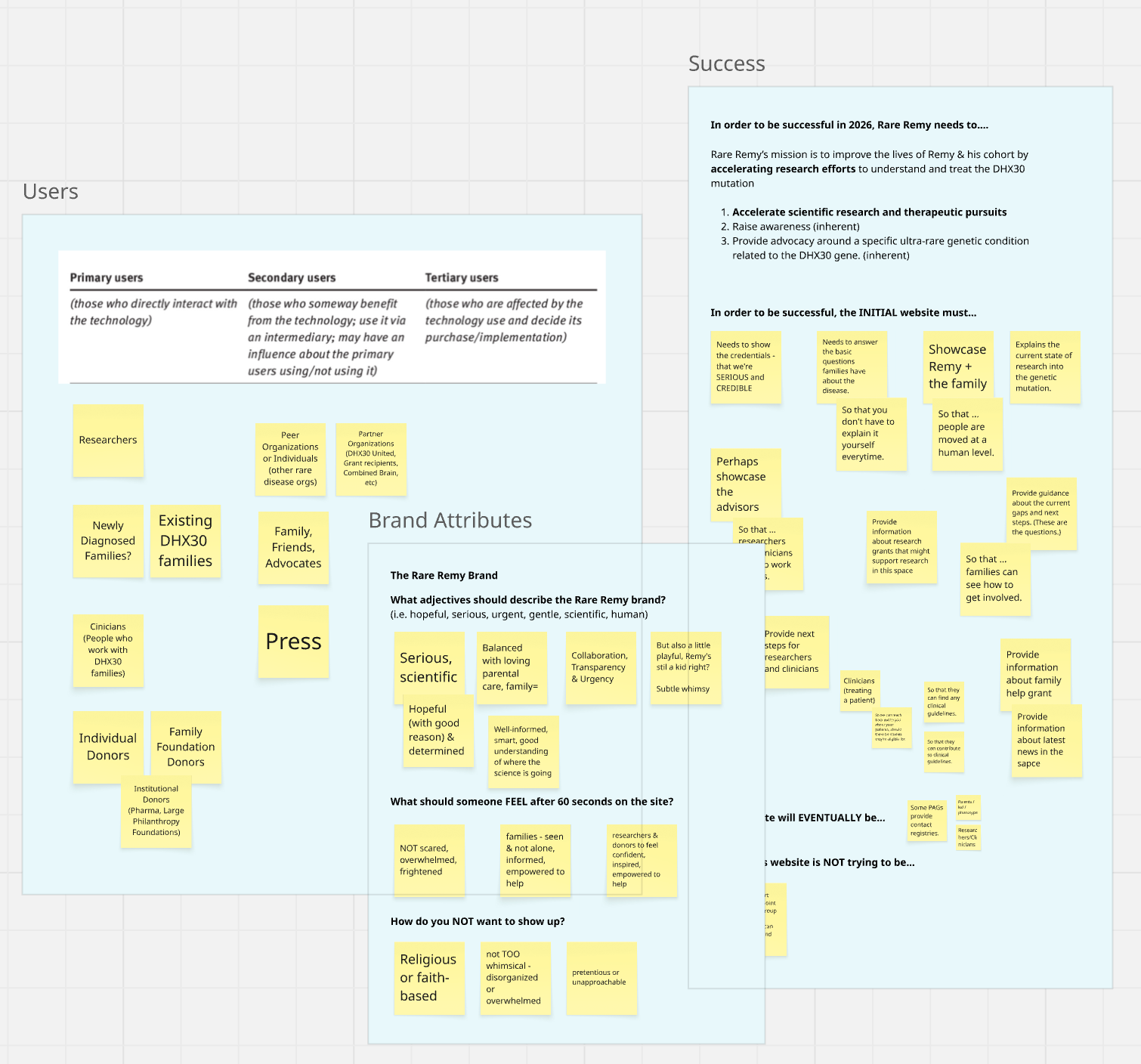
In our discovery workshop with the team, we covered important questions about the users of the site, the desired attributes of the brand, and how success would be defined for the project.
When a child is diagnosed with an ultra-rare genetic condition, there is no established playbook. DHX30 syndrome, a rare neurodevelopmental disorder, has only about a dozen known variants worldwide. Families arrive at the diagnosis after a long and often harrowing journey through genetic testing, and the research landscape is thin enough that a single motivated family can meaningfully change its trajectory.
That is exactly what Lizz and Bobby set out to do after their son Remy was diagnosed. Drawing on their backgrounds in business and biomedical engineering, they founded Rare Remy, a nonprofit dedicated to accelerating understanding and treatment of DHX30 syndrome.
To do that, they needed a digital presence that could do two very different jobs at once. Researchers and clinicians needed to see a serious, scientifically literate organization worth collaborating with. Newly diagnosed families needed to feel safe, seen, and informed, without fear mongering or overwhelm.
Slide UX was brought in to lead discovery, information architecture, branding, and website design, working alongside the founding family and their scientific advisor to take the foundation from a blank page to launch.
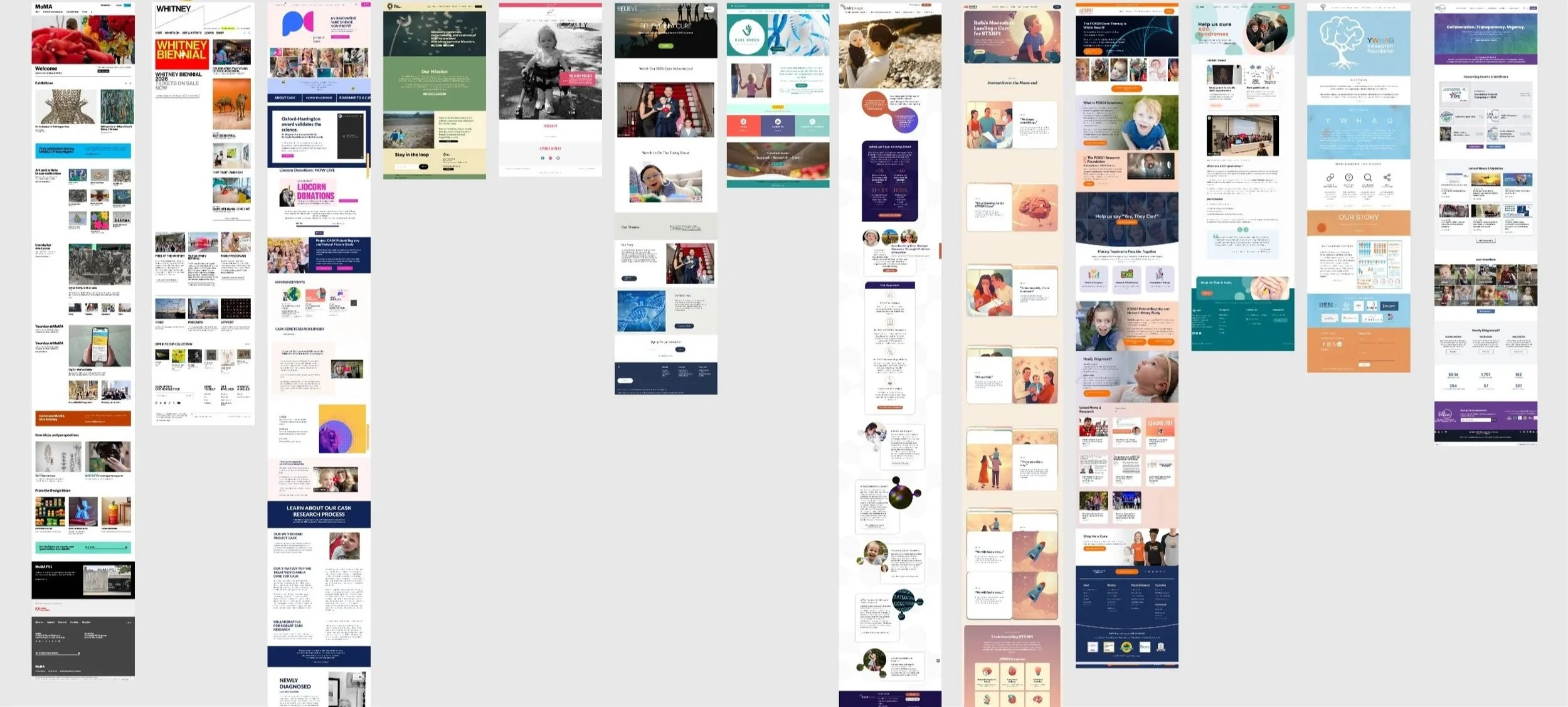
We analyzed examples of websites both from similar organizations as well as out-of-industry examples and used the team’s input about these websites to draft a creative brief for the Rare Remy website.
What we did
Our work spanned strategy, brand, and build:
Deep Experience in Rare Disease and Nonprofits: Slide UX’s work with organizations across brain change and rare disease, including founding and building the digital presence for a familial Alzheimer’s nonprofit, meant we arrived already fluent in the dynamics of patient advocacy groups, contact registries, fiscal sponsorship, and the delicate balance between scientific authority and family voice
Discovery Workshops: We facilitated structured working sessions to define primary and secondary audiences, map what each user should be able to do, articulate organizational values, and draw clear boundaries around what the site would not try to be, protecting the lean scope from creep
Competitive Analysis & Information Architecture: Working from the family’s proposed outline and a side-by-side audit of six peer patient advocacy group websites, we defined a focused site map that serves families at an accessible level and researchers at depth, with clear calls to action tailored to each audience

Working closely with the Rare Remy team, we defined a site map which helped reveal the content that would be needed, and the page templates that would be necessary.
Branding from the Ground Up: We led the family through logo fundamentals, explored twelve conceptual directions, and delivered a complete brand package including logo, color palette, and typography, all rooted in the Van Gogh story behind Remy’s name
AI-Accelerated Design Exploration: Using AI-assisted design tools, we generated rapid website concepts from the creative brief early in the engagement, letting the family react to realistic options in week two rather than waiting weeks for traditional mockups
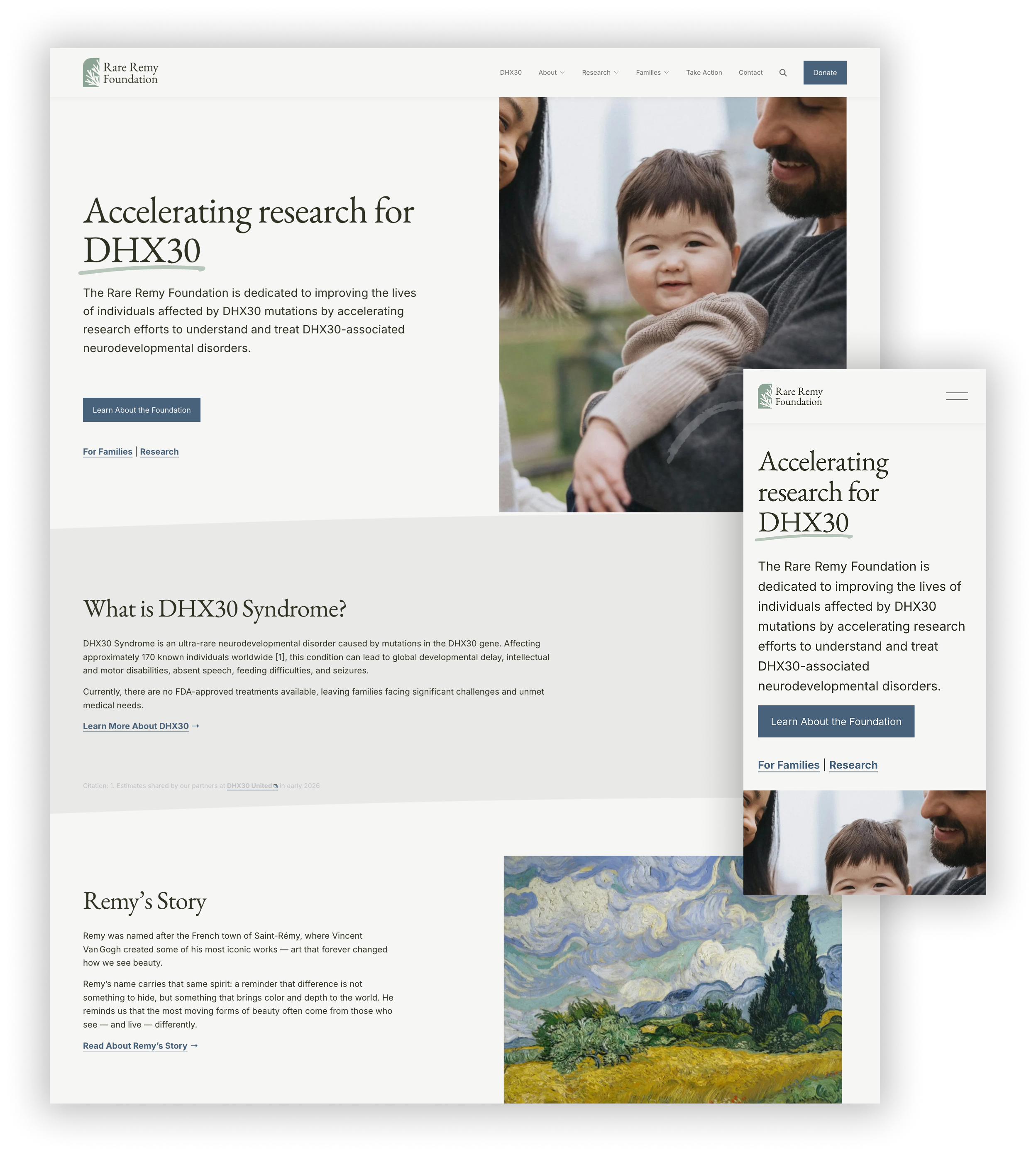
Website Design & CMS Build: We designed and built the site in Squarespace with accessibility-checked color contrast, a content template system the family could write into, and a lightweight contact capture strategy designed to grow into a future registry
“They put deep thought into what makes sense from a design and user perspective.”
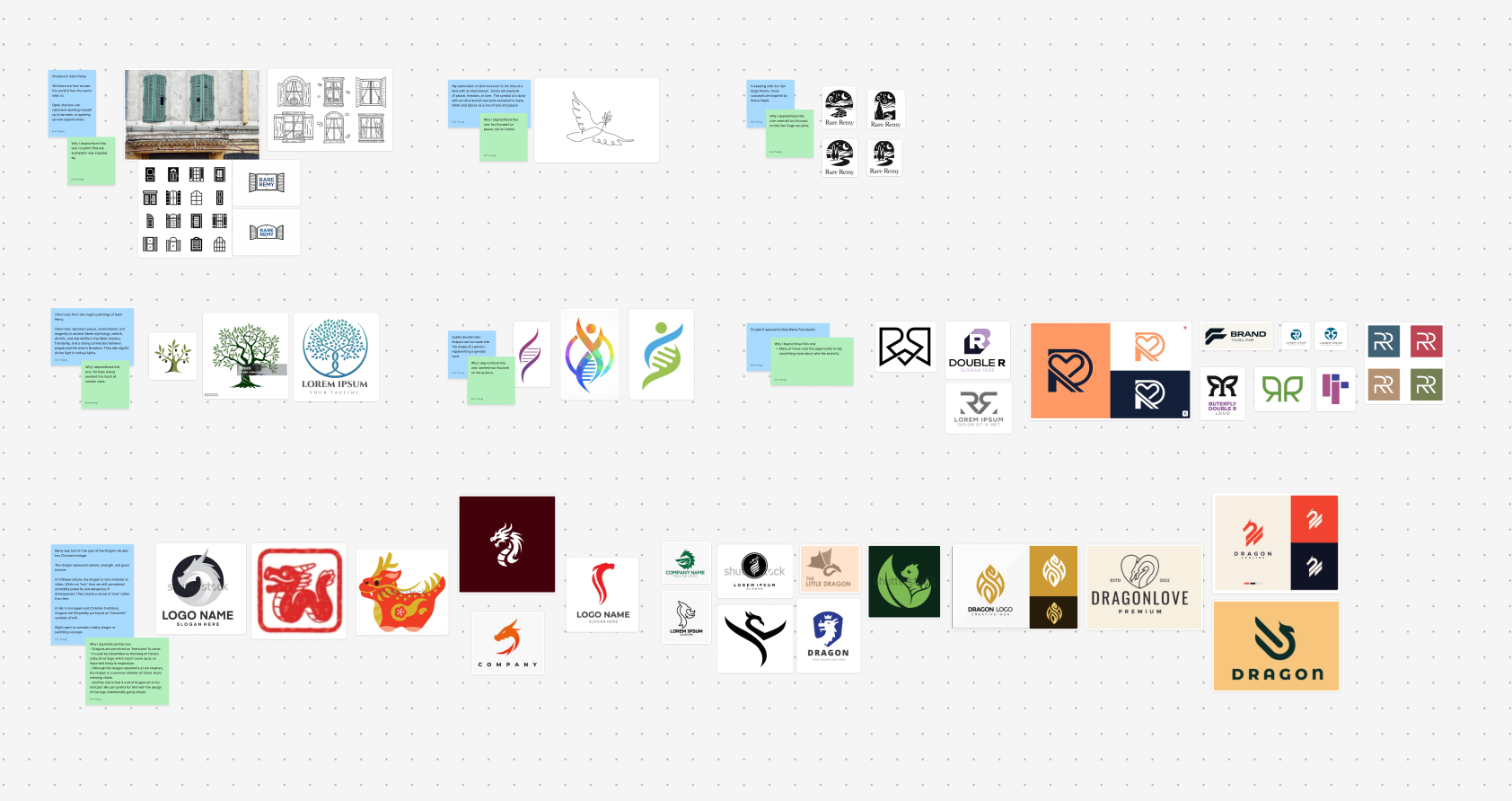
To narrow on logo concepts, we began with conceptual zones that included everything from the cypress trees of Van Gogh’s Saint-Rémy-de-Provence to shooting stars to the double R of Rare Remy.
The results
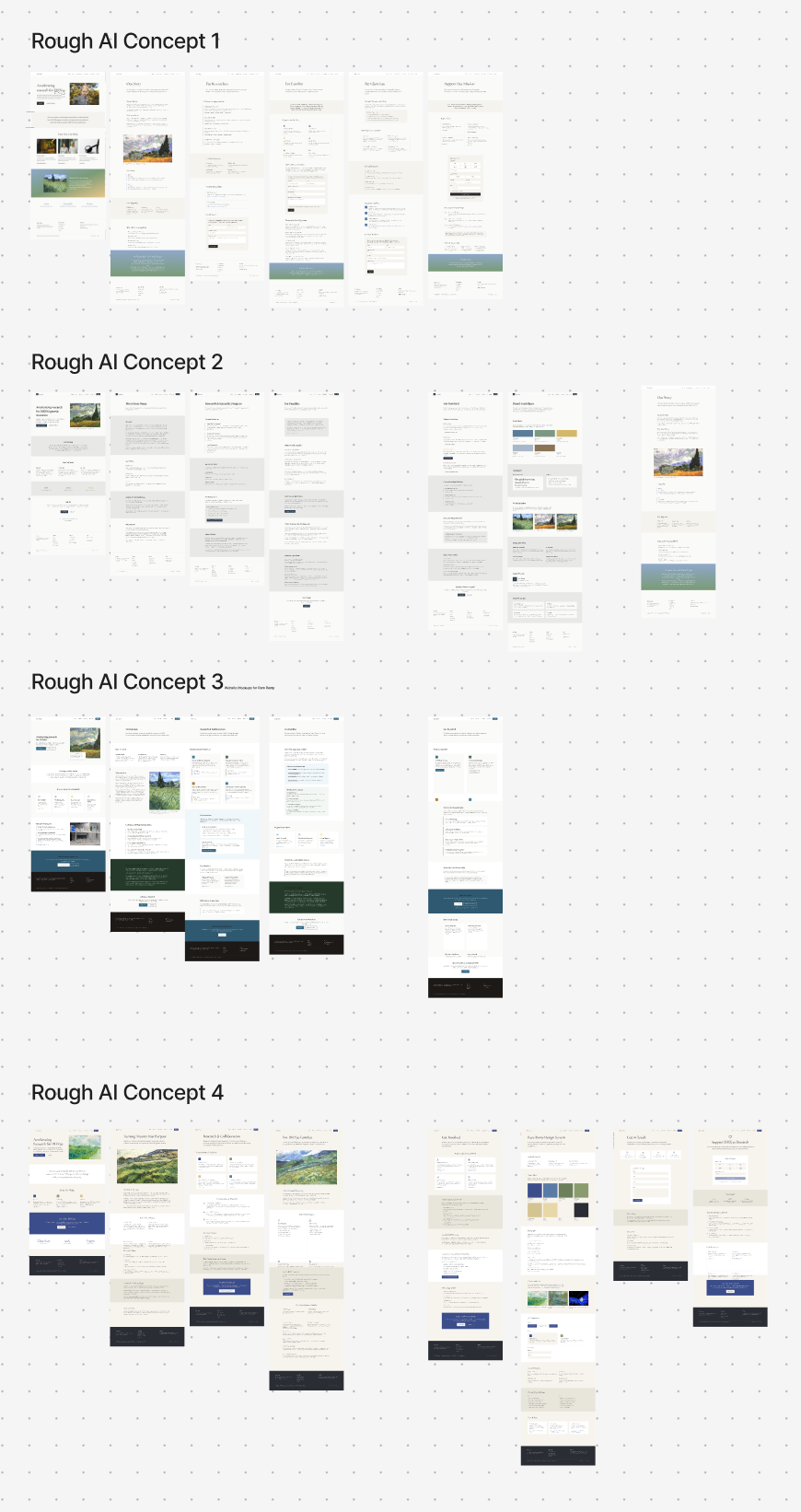
We used cutting-edge AI tools to rapidly generate visual concepts. This helped us quickly align on what was working and what wasn’t, arriving at a final set of visual styles quickly.
In roughly ten weeks, from January to early March 2026, a brand new organization went from a blank page to a launched website, hitting every project milestone on schedule. The engagement delivered:
A complete brand identity including logo, color palette, typography, and visual motifs the family can apply consistently across the website, print, and social
A focused information architecture that answers basic science questions for families, hands researchers a clear picture of the current DHX30 landscape and its gaps, and routes community support to partner organizations rather than duplicating them
A beautiful website the family can maintain and grow themselves, with page templates, copywriting guidance, and a donation pathway built around their fiscal sponsorship
A contact capture approach that respects the organization’s current capacity while preserving the one-time opportunity to connect with families, researchers, and clinicians from day one
Most importantly, the foundation raised $90,000 in its first seven months, fueled by a digital presence that gives donors, researchers, and families a credible organization to believe in.
“She’s not gonna just let me do whatever. She’s gonna make me answer these hard questions, which is frankly how you’re supposed to do it.”
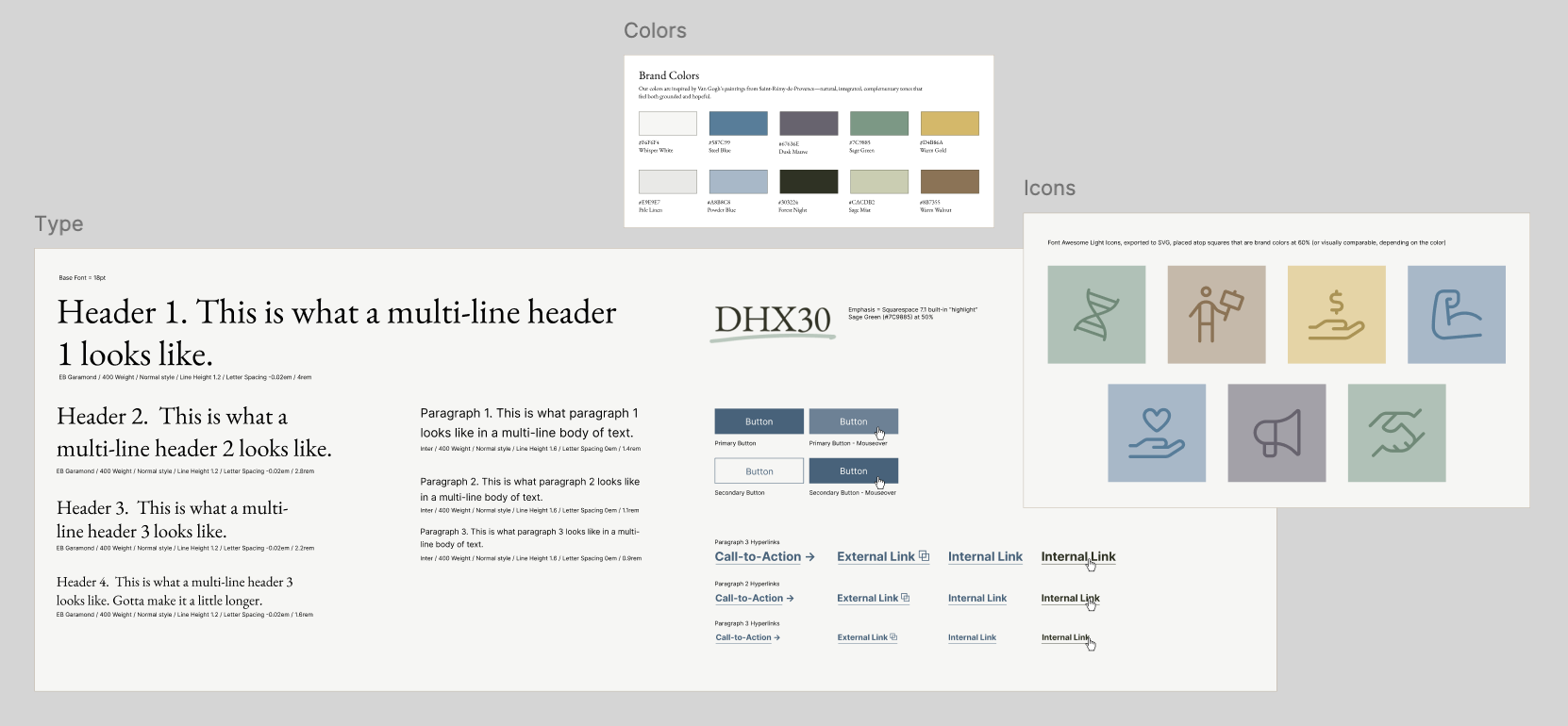
We delivered a brand kit that allows the Rare Remy team to build and launch new communications while remaining consistant with what we started together
Looking back
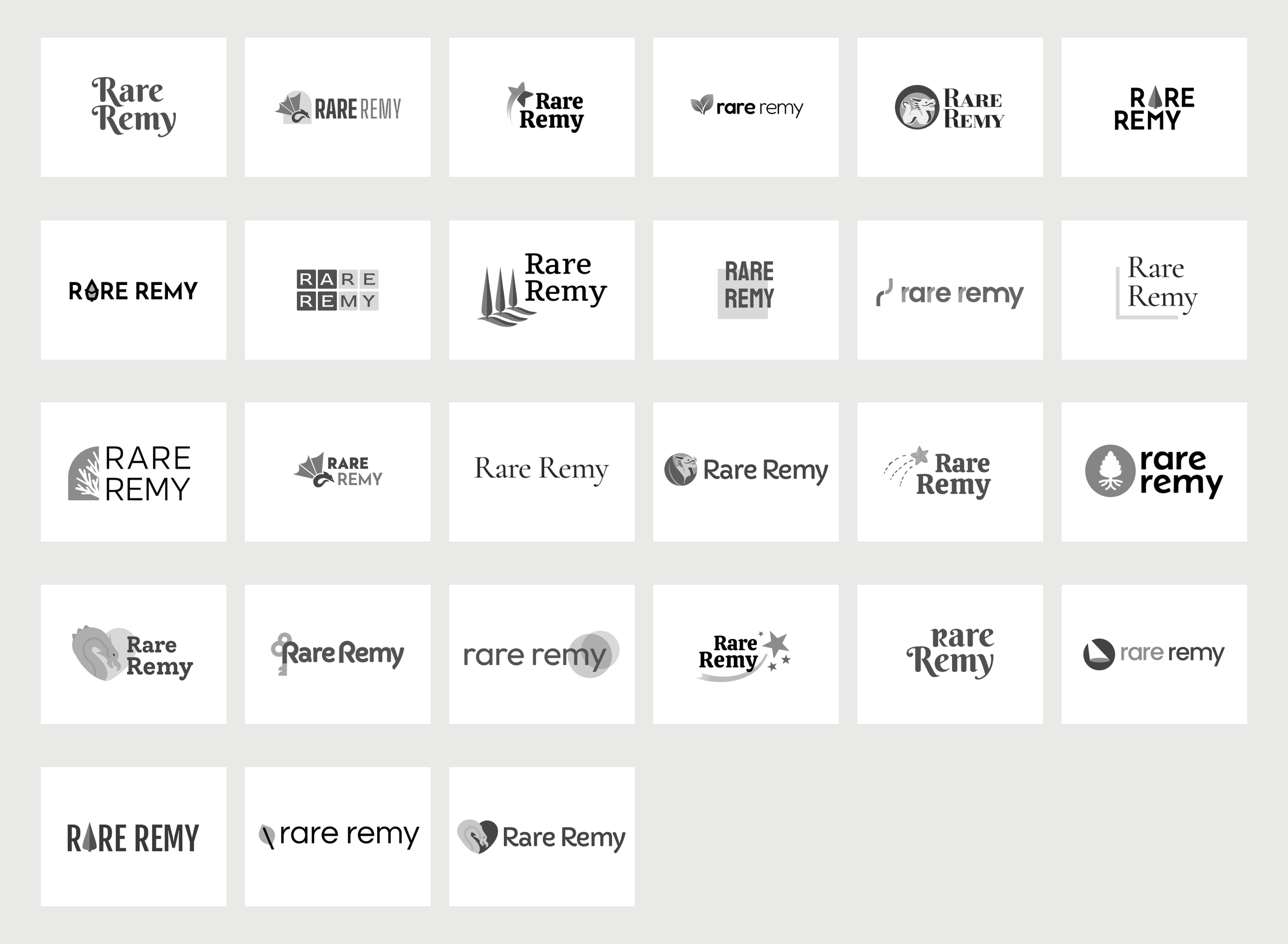
We drafted dozens of greyscale logo options, exploring specific fonts and conceptual themes. This enabled the team to use process of elimination to zero in on their favorites.
This project shows what Slide UX brings to organizations at the very beginning of their journey, where every design decision carries outsized weight.
An ultra-rare disease nonprofit lives or dies on credibility. Researchers decide in seconds whether a family foundation is a serious potential collaborator. Families in the hardest moment of their lives decide just as quickly whether a website is a safe place to learn. The design had to earn both audiences at once.
We also structured the engagement to match the client’s reality. A lean, phased scope let the founding family contribute content development themselves, keeping costs appropriate for a young nonprofit while ensuring the foundational work, from information architecture to brand, was done with professional rigor. In their review, the client noted the team’s communication, openness to feedback, and flexibility when plans needed to shift.
By pairing thoughtful strategy with an efficient, AI-accelerated design process, we helped Rare Remy show up the way it deserves to: deeply human, scientifically serious, and built to last.
“Erin, seriously, you killed it.”